

We’re here to provide thorough and responsible evaluations whenever needed. Skin biopsies are performed on-site at the On.Top Specialist Center to save you time and effort — and to ensure the diagnostic results are received quickly and directly by our team, allowing for timely decisions about your treatment plan.
A biopsy is a medical procedure in which a small sample of skin is taken for further examination.
The sample is sent to a laboratory where it is examined under a microscope to diagnose various skin conditions, including suspicious lesions such as melanoma, other skin cancers, inflammatory skin diseases, or infections.
Biopsies help determine whether a lesion is malignant or benign, and provide essential information to guide treatment decisions.
The recommendation for a biopsy is based on the results of your clinical exam, dermoscopic findings, or digital mole mapping. In some cases, additional tests such as molecular or genetic analyses may be required.
The decision to proceed with a biopsy is always made based on your doctor’s clinical judgment and in full dialogue and agreement with you, the patient.
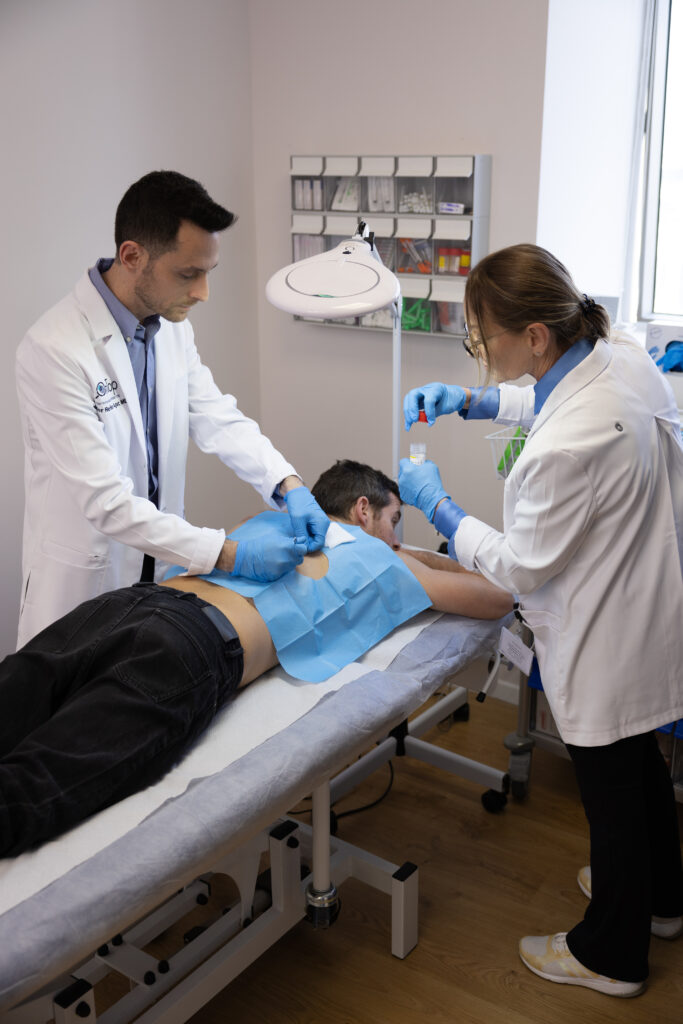
A biopsy involves removing a tissue sample — either the entire lesion or part of it — for microscopic evaluation. It is a relatively simple procedure performed in the clinic, with minimal cosmetic impact.
If the lesion is confirmed to be cancerous, a more extensive surgical procedure outside the center may be necessary.
At the On.Top Specialist Center, we perform all three main types of skin biopsy:
After the biopsy is taken, the tissue sample is sent to a pathology laboratory for professional evaluation.
It is important to understand that the diagnosis provided by the pathologist is a crucial step in guiding further medical decision-making and treatment planning. Diagnostic accuracy is essential, especially when dealing with skin lesions.
In Israel, there are only a few dermatopathologists—pathologists with specialized expertise in interpreting skin biopsies. As a result, in many medical centers, skin samples are reviewed by general pathologists.
At OnTop, we adhere to the highest standards: every biopsy is interpreted exclusively by a board-certified dermatopathologist with extensive experience in diagnosing a wide range of skin conditions. This ensures that our patients receive a precise and reliable diagnosis.
In addition, all samples are processed through a boutique pathology laboratory that provides exceptionally fast turnaround times—typically within seven business days—compared to the two to three months common in most institutions.
נגע עורי יוצא דופן, שנראה שונה משאר נגעי העור
גילוי נגע שלא היה קודם
נגע המשנה את צורתו או גודלו, או שלפתע מתחיל לדמם
לבעלי סיכון מוגבר למלנומה ולסרטן העור מומלץ לבצע אבחון מוקדם ובדיקת סקר אחת לחצי שנה עד שנה. חייבים לזכור כי מטופלים המאובחנים עם סרטני עור, ובמיוחד מלנומה בשלב מוקדם, הם בעלי אחוזי שרידות גבוהים מאוד ולרוב לסרטן אין כל השפעה על אורח או תוחלת החיים. לעומת זאת, מטופלים המאובחנים עם סרטני עור ומלנומה בשלב מתקדם הינם בעלי אחוזי שרידות נמוכים יותר ונזקקים לניתוחים מורכבים ולטיפולים תרופתיים.
בנוסף, קיימת הסכמה רחבה של הארגונים המדעיים לגבי הצורך של מטופלים עם היסטוריה של מלנומה להישאר במעקב לכל חייהם אצל רופא עור ובמקרים מסוימים גם רופא אונקולוג. תדירות המעקב המומלצת משתנה, בין היתר, כתלות במשך הזמן שחלף מאז האבחנה של המלנומה. התדירות נעה בין אחת לשלושה חודשים עד אחת לשנה.
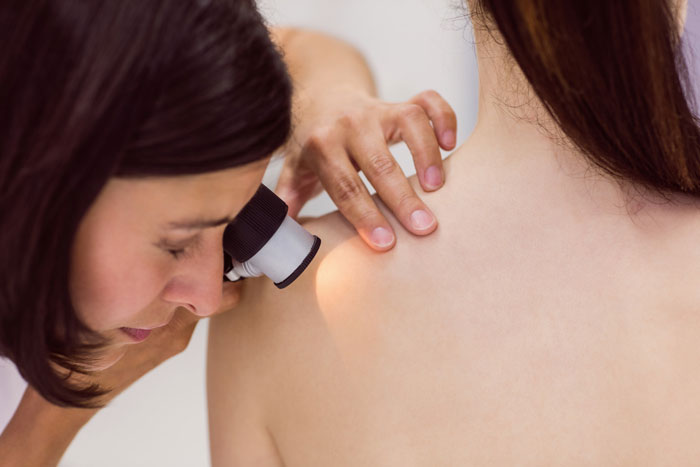
קיימים גורמי סיכון נמוכים יותר כמו עור בהיר, שיער ג’ינג’י, עיניים כחולות או ירוקות, והיסטוריה של כוויות שמש או מצבים של מערכת חיסונית בדיכוי (כתוצאה מסרטן, מחלות אוטואימוניות או נטילת תרופות המדכאות את מערכת החיסון כגון במטופלים מושתלי איברים) בכל מקרה, ההמלצה היא לשמור על ערנות גבוהה גם אם לא נכללים בקבוצת הסיכון, ולשים לב לכל הופעה או שינוי של נגע חשוד- נקודת חן, שומה או כתם.





At our center, you’ll find a dedicated team of experts — experienced medical professionals focused on the diagnosis and treatment of melanoma and skin cancer, along with an administrative team to support you with all logistics and coordination.
The procedure itself is generally not painful and there’s no need to worry. The biopsy is performed under local anesthesia, so you may feel a brief pinch or mild discomfort from the injection.
As with any procedure involving an incision, there may be some side effects. However, in the case of skin biopsy, the risk is low and the procedure is performed under strict sterile conditions.
Possible side effects may include bleeding or localized infection. If you are taking blood thinners, your doctor will advise you whether to pause them before the procedure.
It’s also important to know that any procedure involving a skin incision (except some shave biopsies) may leave a small scar.
The procedure usually takes only a few minutes, though in some cases it may take longer depending on the specifics.
Preparation for a skin biopsy depends on the type of biopsy, the location of the lesion, and your overall health. Key preparation steps include:
On the day of the biopsy, the procedure is usually done under local anesthesia and is relatively short. Afterward, you’ll need to keep the area clean and change dressings according to your doctor’s instructions.